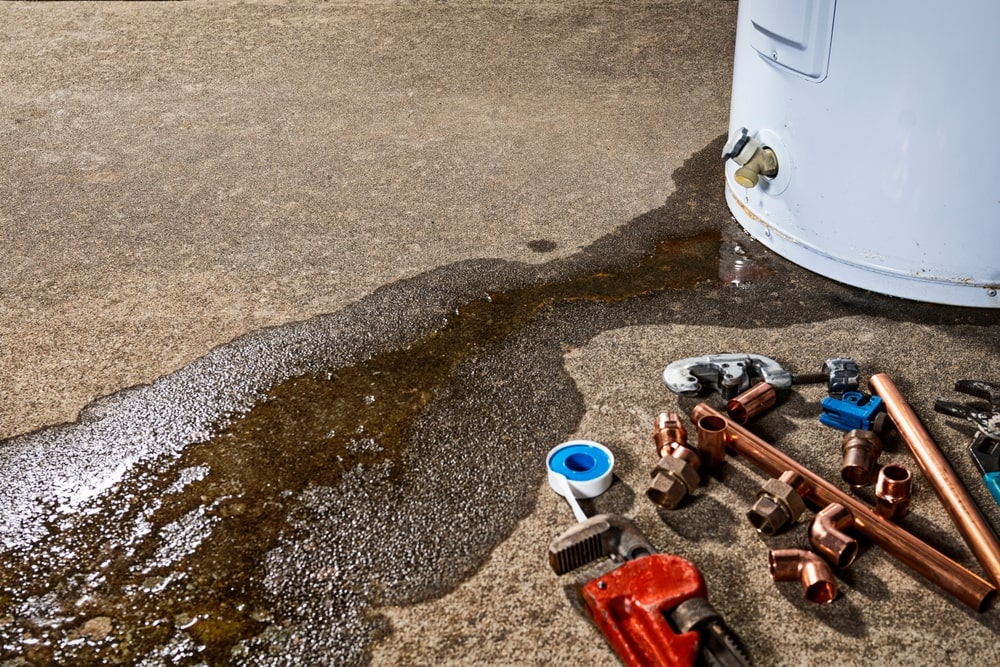
Notice a small puddle near your water heater? That puddle of water could indicate water damage from your water heater. What may seem like a minor leak can quickly turn into a much bigger issue. From mold growth to expensive repairs, a leaking water heater can cause serious damage if left unchecked.
As an Atlanta homeowner, it’s important to recognize the signs of a leaking water heater early. At Georgia Water & Fire, we understand how stressful it can be to deal with unexpected water damage. That’s why we want to help you spot early warning signs and take steps to prevent future water damage from water heaters.
Why Water Heaters Leak — The Hidden Causes of Damage
Water heaters don’t just leak overnight. There are a few common causes that build up over time, and understanding them can help you spot trouble early. Here’s what could be going on behind the scenes:
Corrosion and Age
Every water heater has a lifespan of 8–12 years. As your unit ages, it starts to corrode from the inside. Rust weakens the tank, which can quickly snowball into leaks. Over time, internal rust can weaken the tank, eventually leading to complete failure if left unchecked.
Sediment Buildup
Hard water is common in the Atlanta area, and over time, minerals can build up at the bottom of your tank. This makes the heater less efficient and puts extra pressure on the tank, creating the ideal condition for leaks and for your system to overheat.
Loose Plumbing Connections or Valves
After years of vibration, plumbing connections and valves around the water heater can loosen, creating small leaks that worsen over time. Even minor leaks can cause water damage to surrounding areas, such as flooring or walls.
Faulty Temperature & Pressure (T&P) Valve
This valve helps regulate the internal pressure of your water heater. If it’s faulty, it can cause slow, unnoticed leaks that only get worse over time. A malfunctioning T&P valve also increases the risk of dangerous pressure buildup in the tank, which could escalate into a more serious issue if not addressed promptly.
High Pressure or Overheating
If your water heater is operating under excessive pressure or overheating, it can strain seals and joints, potentially leading to leaks and other damage. The added stress on the water heater can cause seals to fail, resulting in significant water damage if left unresolved.
Signs Your Water Heater Is Causing Water Damage
It’s easy to overlook small signs of trouble, but even a minor water leak can cause significant damage. Here are a few signs that your water heater might be leaking:
- Small Puddles or Damp Areas Near Heater: A little water on the floor near your water heater is a red flag. While it might seem like nothing at first, it could be the beginning of a bigger problem.
- Discolored Water: If your tap water turns rusty or discolored, it’s a sure sign of corrosion in your tank. You might also notice a strange taste or smell in your water.
- Musty Odors: If there’s a musty smell near your water heater or around the walls, it could be mold or mildew. Mold and mildew can grow quickly in a damp area, especially if there’s an ongoing leak.
- Warped Baseboards or Flooring: Water can seep into your floors, causing them to warp or bubble. This can be a sign that water has been leaking from your water heater.
- Hissing, Dripping, or Popping Noises: If you hear unusual noises from your heater, such as hissing or popping, it could be due to internal pressure or sediment buildup. Both can eventually lead to leaks.
- Rising Humidity or Mold Around Heater: If you notice a musty smell, higher humidity, or even mold near your water heater, it’s a red flag indicating a slow leak.
What to Do Immediately If Your Water Heater Leaks
Discovering a leak can be stressful, but don’t panic. Acting fast can help prevent a bigger mess. Here’s what you should do right away:
- Turn Off the Power or Gas: If you have an electric water heater, flip the circuit breaker to shut off the power. If it’s gas-powered, turn off the gas supply.
- Shut Off the Water Supply: Find the cold-water inlet valve and turn it off. If you’re not sure where it is, another option is to shut off the main water supply.
- Drain the Tank (If Safe): If it’s safe, attach a hose to the drain valve and empty the tank. Let the water cool down first if it’s hot.
- Mop Up Standing Water: Use a mop or wet vac to clean any standing water around the heater. The faster you get rid of the water, the less damage to your floors and walls.
- Document the Damage: Take photos or videos of the water damage for insurance purposes. This documentation will be helpful when you file a claim.
- Call a Professional: Once you’ve done all you can, it’s time to get help. You can reach out to Georgia Water & Fire’s emergency restoration services for immediate assistance.
How Water Heater Leaks Can Damage Your Home
Water heater leaks often start small but can quickly escalate into significant damage. One of the first things you might notice is mold and mildew. Mold can grow fast, often within 24–48 hours. Not only does mold leave behind a musty smell, but it can also cause health issues, especially for those with respiratory problems.
Leaks can also cause structural damage to your home. Water can seep into your floors, walls, and even the foundation, causing wood to rot, drywall to weaken, and flooring to warp. If a leaking water heater goes unnoticed for too long, it can lead to cracks in your home’s foundation, which can be expensive to repair and difficult to fix.
And then there’s the danger of electrical hazards. If the leak reaches electrical outlets, wiring, or circuit breakers, you’re looking at the potential for electrocution or even fire. Always call a professional if you think water has made contact with any electrical components.
The longer you wait to address water damage from a water heater, the worse it will get. Early action helps prevent these serious issues and saves you from costly repairs.
How to Prevent Future Water Damage From a Water Heater
A little routine maintenance on your water heater now can save you from big headaches (and expensive repairs) later. For starters, try flushing your water heater once a year to clear out sediment buildup. It’s a quick, easy task that helps your heater run more efficiently and reduces the risk of leaks caused by sediment.
Don’t forget to check the temperature and pressure (T&P) valve regularly. This valve is essential for maintaining stable pressure inside the tank. If it’s not working correctly, it can lead to leaks, so keeping an eye on it is key. Replacing the anode rod every 3–5 years is another good move. It helps prevent corrosion inside the tank and can extend the life of your water heater.
Along with these simple DIY tasks, it’s a great idea to have your water heater inspected once a year by a licensed plumber. Also, consider installing a drain pan and a leak alarm. A leak alarm can alert you if your water heater is leaking.
Choose Georgia Water & Fire for Water Damage Restoration in Atlanta
If you have water damage from a water heater, the sooner you act, the better. Whether it’s cleaning up the water or fixing the underlying issues, getting help as quickly as possible can save you a lot of stress and hassle. Tackling a leaking water heater early on can help you avoid bigger problems down the road, saving you time, money, and peace of mind.
Not sure what to do next? Don’t worry, our team is here to help. Whether it’s fast, reliable water damage restoration or mold remediation, the experts at Georgia Water & Fire have you covered.
Don’t let water damage from a water heater linger. Contact us today, and we’ll guide you through the first steps to restoring a safe home.