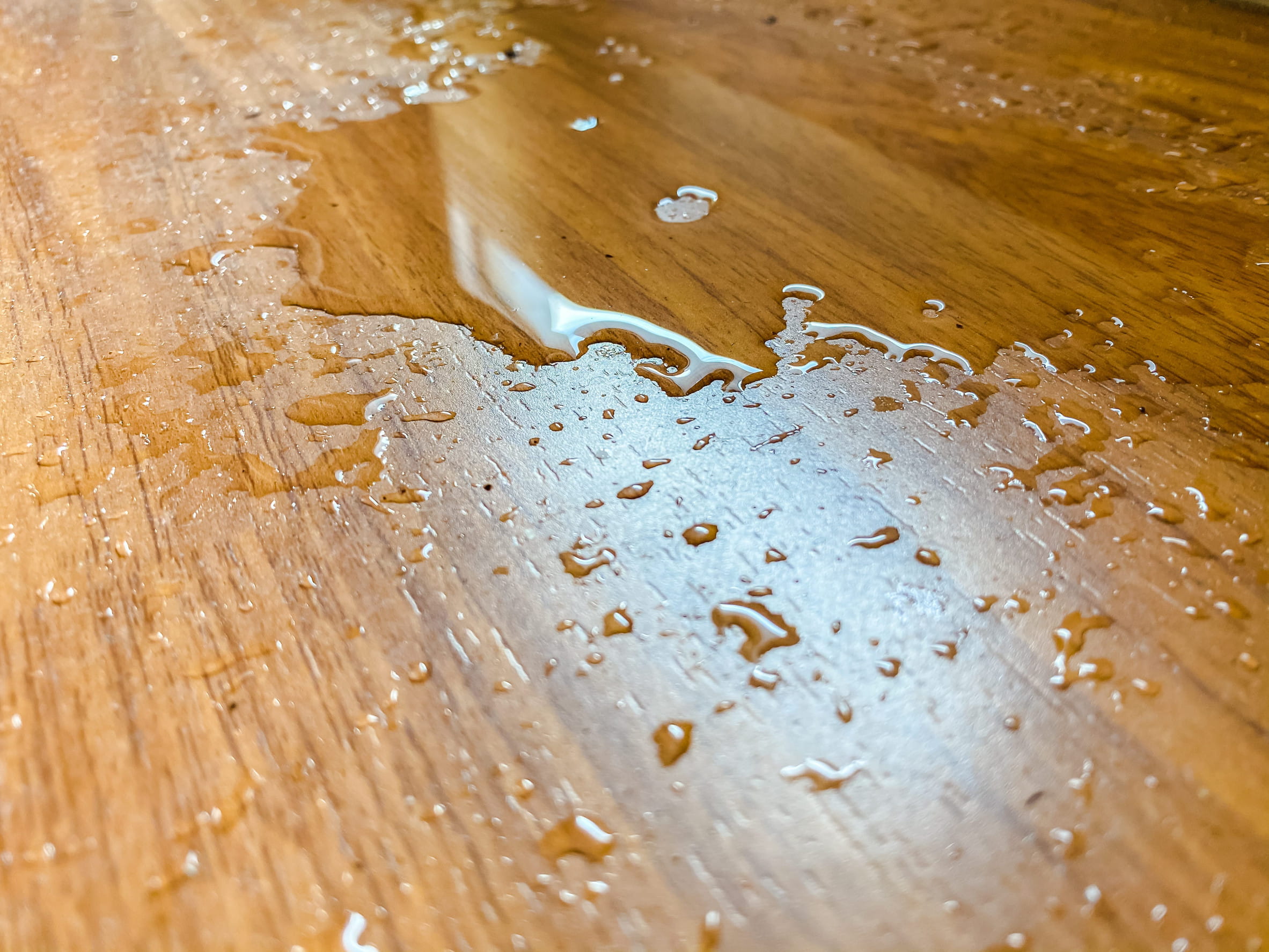
You walk into your kitchen and immediately notice something isn’t right. Maybe a refrigerator water line leaked overnight, or a recent rainstorm outside has started making its way inside. Now you’re staring at hardwood floor water damage and wondering if your floors can be saved or if it’s time to start planning a replacement.
Here’s the good news: many hardwood floors can be restored when the damage is addressed quickly.
At Georgia Water & Fire, we’ve seen firsthand how acting fast after a burst pipe, appliance leak, or storm can make all the difference.
Before you assume the worst, it’s important to understand what determines whether a floor can be restored or replaced.
Can Water-Damaged Hardwood Floors Actually Be Saved?
In many cases, yes. Whether hardwood floor water damage repair is possible comes down to three things: how long the floor stayed wet, where the water came from, and how far the moisture spread beneath the surface.
Clean water from a broken supply line gives you the best chance of saving your floors, especially when drying starts quickly. Water from appliances carries a higher risk of contamination and often requires additional treatment. If the damage was caused by sewage or floodwater, replacement is usually the safest option because of the health risks.
How Long Before Hardwood Floors Are Permanently Damaged?
Hardwood may look solid, but water doesn’t stay on the surface for long. It quickly works its way through the finish and into the wood fibers below. After about 24 hours, moisture has often penetrated deep enough to begin changing the shape of the boards. Within 48 to 72 hours, cupping becomes more noticeable, and warm, damp conditions create an environment where mold can begin developing.
Here in Metro Atlanta, high summer humidity makes the situation even more challenging. Moisture leaves building materials more slowly than it would in a drier climate, which is one reason quick professional drying is so important.
Does the Type of Hardwood Matter?
Yes. Solid hardwood is generally the most forgiving because it can often be dried, sanded, and refinished as long as its structural integrity is intact. Engineered hardwood varies depending on its construction. Products built with quality plywood cores typically perform better than those made with MDF cores, which tend to swell permanently after becoming saturated.
The finish also plays a role, as surface-sealed floors provide more protection against standing water, while older wax-finished floors allow moisture to more easily penetrate.
Signs Your Hardwood Floor Has Water Damage
Water damage on hardwood floor surfaces doesn’t always look dramatic right away. Some of the earliest warning signs are easy to overlook, especially after a small leak. As you inspect your home, watch for:
- Cupping: The edges of the boards start to curl higher than the center. This is one of the earliest signs of moisture and can often be corrected if the floor is dried quickly.
- Crowning: The center of the board sits higher than the edges. This usually happens when moisture is trapped beneath the flooring, or the floor was refinished before it had fully dried.
- Buckling: Boards begin lifting away from the subfloor. This is a sign of significant water damage and often means sections of the floor will need to be replaced.
- Dark Stains or Discoloration: Black, gray, or unusually dark spots may mean moisture has worked beneath the finish or mold is starting to develop.
- Soft Spots: If the floor feels spongy or gives under your feet, moisture has likely reached the subfloor. In some cases, widespread water intrusion may also require services like basement flooding repair to address the damage throughout the home.
- Visible Mold: Mold along seams or baseboards is a sign the area needs more than drying. A professional inspection finds how far the contamination has spread and what steps are needed to restore the space.
While some damage is merely cosmetic, other issues start affecting everything underneath the floor. Moisture meters help determine how much water remains hidden below the surface, allowing restoration professionals to recommend the right solution before repairs begin.
How Professionals Repair Water-Damaged Hardwood Floors
When it comes to how to fix water damage on hardwood floor, the biggest mistake is focusing only on what you can see. Hardwood often traps moisture beneath the surface, so restoring it takes more than drying the top layer.
Here’s how the pros do it:
Step 1 — Water Extraction and Moisture Assessment
The first step is removing standing water before it has more time to soak into the hardwood and subfloor. Technicians then use professional moisture meters to determine how much moisture remains throughout the affected area.
Step 2 — Structural Drying with Commercial Equipment
Commercial air movers and dehumidifiers are positioned to dry both the hardwood and the materials below it. Drying typically takes three to five days, though heavily saturated floors often take longer.
Step 3 — Sanding, Refinishing, or Board Replacement
Once the floor reaches a safe moisture level, the remaining damage is evaluated. Minor cupping can often be sanded and refinished, while severely damaged boards may need to be replaced. When extensive water damage is involved, professional residential water restoration helps address both the flooring and any hidden moisture before repairs start getting underway.
Mistakes Homeowners Make After Hardwood Floor Water Damage
One thing we’ve learned after helping homeowners all across Metro Atlanta is that the biggest problem often isn’t the initial leak. It’s waiting to see if it dries on its own or taking steps that make the damage worse.
Some of the most common mistakes include:
- Waiting To See What Happens: Hardwood rarely improves on its own. The longer moisture remains, the greater the chance of permanent warping or mold growth.
- Relying On Household Fans: Fans can help dry the surface, but they don’t remove moisture trapped inside the wood or subfloor.
- Sanding Too Soon: Sanding before the floor has completely dried can create long-term problems because the boards may continue changing shape as moisture leaves the wood.
- Assuming the Floor Is Dry: Hardwood can feel dry while moisture remains hidden below the surface. Professional moisture testing removes the guesswork.
- Skipping Documentation: If you’re planning to file an insurance claim, take photos and videos before cleanup begins whenever it’s safe to do so. Having good documentation makes the claims process much smoother.
Why DIY Drying Rarely Works on Hardwood
While it may be tempting to try to dry your hardwood floors yourself, doing so often ends with plenty of hidden moisture being left behind. Tongue-and-groove flooring traps water between boards, and the subfloor usually stays wet much longer than the hardwood above it. Professional drying focuses on both areas, reducing the risk of mold and extra structural damage.
When to Call a Professional vs. Attempt DIY Repairs
A small spill that’s cleaned up right away usually isn’t cause for concern. Once water has been sitting on your hardwood floors for any length of time, though, it’s worth having the damage professionally assessed. Moisture has a way of spreading beneath the surface, and by the time visible signs appear, the problem may be larger than it looks.
Call a professional if:
- Standing water remained for more than a couple of hours.
- The water came from a toilet, sewer backup, or flooding.
- You notice cupping, buckling, soft spots, or a musty smell.
- The affected area covers more than a small section of flooring.
DIY may be enough if:
- The spill came from a clean water source and was wiped up immediately.
- The floor still looks and feels normal after 24 hours.
- The affected area is limited to a few boards.
A professional assessment measures moisture throughout the flooring and subfloor, identifies the water category, and outlines the best path forward. It also provides valuable documentation if you decide to file an insurance claim.
If you need immediate help after a leak or flood, our team provides emergency restoration services throughout Metro Atlanta. Hidden moisture isn’t always visible, and finding it early can make the difference between a straightforward repair and a much larger restoration project.
Don’t Wait To Address Hardwood Floor Water Damage
Discovering hardwood floor water damage can feel overwhelming, but acting quickly gives your floors the best chance of being restored. If you’ve noticed warping, staining, or standing water after a leak or flood, Georgia Water & Fire is ready to help. Our team is ready to assess the damage and find a restoration option to stop your hidden moisture from becoming bigger repairs.
Frequently Asked Questions About Hardwood Floor Water Damage
Can Cupped Hardwood Floors Be Fixed After Water Damage?
Usually, yes. If the floor is dried before the wood is permanently damaged, cupping can often be corrected with sanding and refinishing. The sooner you start the drying process, the better the chances of saving the floor.
How Long Does It Take To Dry Hardwood Floors?
Most hardwood floors dry within three to five days using professional equipment. If water has reached the subfloor, it may take closer to a week before repairs can safely begin.
Does Homeowner’s Insurance Cover Hardwood Floor Water Damage?
It often does if the damage was caused by something sudden, like a burst pipe or an appliance leak. Damage from ongoing leaks or flooding is usually handled differently, so it’s always worth reviewing your policy.
When Is Hardwood Floor Water Damage Too Severe To Repair?
If the floor has been exposed to sewage, floodwater, or has severe buckling and subfloor damage, replacement is often the safest option. A professional inspection can confirm how extensive the damage really is.
How Do I Know If There’s Moisture Under My Floor?
You can’t always tell just by looking. Warping, staining, or a musty smell are common warning signs, but moisture meters are the only reliable way to find hidden water beneath the surface.