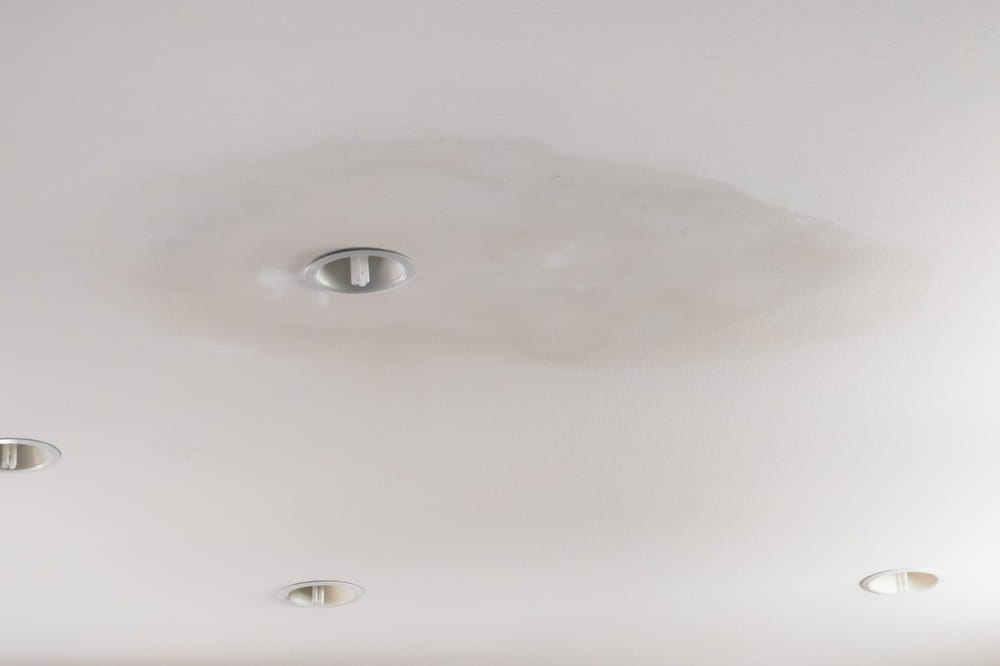
Water stains on your ceiling require a quick response. And once you’ve found the source of the water, you need to fix the leak before repairing the ceiling, or the damage can come right back.
Ceiling water damage repair may mean treating a stain and repainting or removing damaged drywall and drying the space above it. Having served Atlanta homeowners since 1989, Georgia Water & Fire Restoration has seen plenty of ceiling stains that only tell part of the story. Water can spread beyond the spot you see, which is why the right repair depends on what’s happening above the drywall, too.
Drawing from our experience as a water restoration company in Atlanta, this guide will help you determine the ceiling water damage you can repair yourself and when you need to schedule professional restoration.
How to Read the Signs of Ceiling Water Damage
Before you patch or paint, check what the ceiling is telling you. An old, dry stain calls for a very different repair than wet or sagging drywall.
Active Leaks vs. Old Water Stains — What the Difference Means for Repair
A dry brown or yellow stain on firm drywall may be left from an older leak and only need stain treatment and paint. Soft, swollen, or sagging drywall can signal remaining moisture and should not be repaired until the leak is fixed and the area is dry. Since Atlanta’s humid summers can slow drying, use a moisture meter rather than relying on touch alone.
Warning Signs That Point to a Bigger Problem
Bubbling or blistering paint can signal moisture beneath the surface.
Sagging or bowing drywall can mean the material has absorbed enough water to lose strength and may need replacement.
Visible mold growth can develop on damp materials, making moisture control an important part of addressing the problem.
Persistent musty odors can point to hidden moisture or affected materials above the ceiling.
If water is coming through a light fixture or another electrical component, stay clear and have an electrician address the hazard.
Common Sources of Ceiling Water Damage in Atlanta Homes
Roof Leaks: Heavy rain or storm damage can allow water through the roof and into the ceiling below.
Plumbing Leaks: Leaks from an upstairs bathroom, kitchen, or laundry area can damage the ceiling beneath them.
Clogged HVAC Condensate Drains: A clogged drain can cause water to back up around the air handler and reach the ceiling.
Freezing Weather: Atlanta cold snaps can occasionally lead to burst pipes and resulting ceiling water damage.
Whatever the cause, confirm the leak has been fixed before repairing the ceiling. Otherwise, you could end up repairing the same spot twice.
How to Repair a Water-Damaged Ceiling Step by Step
Step 1 — Stop the Water Source and Dry the Area
If water has reached a light fixture, ceiling fan, or wiring, avoid the area and have the electrical risk addressed first. Once you stop the leak, use fans and a dehumidifier to dry the area. A moisture meter can help confirm whether the drywall and surrounding materials are ready for repair.
Step 2 — Assess Damage and Cut Out Unsalvageable Drywall
If water has reached a light fixture, ceiling fan, or wiring, avoid the area and have the electrical risk addressed first. Once you stop the leak, use fans and a dehumidifier to dry the area. A moisture meter can help confirm whether the drywall and surrounding materials are ready for repair.
Step 3 — Apply Stain-Blocking Primer Before Any Patch or Paint
If the existing drywall is dry and structurally sound, apply a stain-blocking primer over the water stain before repainting. This helps prevent discoloration from bleeding through the new finish. Before you start priming, patch and sand the new drywall first.
Step 4 — Patch, Mud, Sand, and Paint
Replace any drywall you removed, apply joint compound, and sand the repair smooth once dry. Prime the repaired area before painting, and match the surrounding ceiling texture as closely as possible so the patch blends in.
Mistakes to Avoid When Fixing a Water-Damaged Ceiling
Part of knowing how to repair ceiling water damage is avoiding shortcuts that can hide moisture or leave damaged material behind.
Painting Over a Damp Ceiling: Wait to use paint and primer until the affected materials are fully dry.
Repairing Before Fixing the Leak: An active leak can quickly damage new drywall or paint.
Leaving Damaged Material in Place: Soft, sagging, or deteriorated drywall may need removal rather than a surface patch.
Ignoring Hidden Moisture: Water can remain above the ceiling even when the visible surface feels dry.
Covering Visible Mold: Painting over mold does not address the moisture conditions allowing it to grow.
When to Call a Professional Instead of DIYing Ceiling Water Damage
DIY ceiling water damage repair is not recommended when the damage extends beyond the drywall or the source and extent of the moisture are unclear. Consider calling a water restoration company in Atlanta when:
Water has reached wiring, light fixtures, or other electrical components.
The ceiling sags heavily or looks unstable.
The damage extends into insulation or other hidden materials.
The water came from a sewage backup or another contaminated source.
Mold growth covers more than about 10 square feet or keeps returning after you fix the moisture source.
You cannot locate the leak or determine how far the moisture has spread.
What to Expect From a Professional Ceiling Water Damage Assessment
A professional assessment checks for visible damage and moisture hidden in the ceiling cavity or surrounding materials.
At Georgia Water & Fire Restoration, our residential water restoration services help determine what can dry in place and what needs to be removed before repairs begin. We’ll explain what we find and the work needed to restore the affected area.
If your ceiling water damage repair has moved beyond a safe DIY project, contact our team to schedule an assessment and leave the repair to the pros.
Contact Georgia Water and Fire
Contact us for 24/7 for a professional Ceiling Water Damage Assessment in Metro Atlanta today!
Ceiling Water Damage Repair Frequently Asked Questions (FAQs)
How Long Does It Take for a Water-Damaged Ceiling to Dry Before Repair?
Drying time depends on how wet the ceiling became, the materials affected, airflow, and indoor humidity. Before repairing it, use a moisture meter to confirm the drywall and surrounding materials are dry rather than relying on time or touch alone.
Can I Paint Over a Water Stain on My Ceiling Without Replacing Drywall?
Yes, if you fix the leak and the drywall is dry, firm, and intact. Apply a stain-blocking primer before repainting. Replace drywall that is soft, sagging, warped, or deteriorated.
How Do I Know If My Ceiling Water Damage Requires a Professional?
Call a professional if the ceiling is sagging or unstable, the damage is extensive, the water is contaminated, or it has reached electrical components. You may also need professional help if you find significant mold growth, cannot locate the leak, or aren’t sure how far the moisture has spread.
What Causes Ceiling Water Damage in Atlanta Homes?
Common causes include roof leaks during heavy rain, plumbing leaks from rooms above, clogged HVAC condensate drains, and burst pipes during occasional freezing weather. The visible stain may not be located directly below the source because water travels unpredictably before reaching the ceiling.
How Much Does Ceiling Water Damage Repair Cost?
The cost depends on the size and extent of the damage. A dry stain that only needs primer and paint typically costs less to repair than a ceiling that needs drywall or insulation replacement. The cost can increase if you also need to address the underlying leak, hidden moisture, or mold.